A hair fetish, clinically known as trichophilia, refers to a sexual or sensual fascination with hair. The attraction may centre on the strands on someone’s head, but it can equally involve body hair, facial hair, or even locks that have been cut and kept as an object of desire. Trichophilia sits within the broader landscape of partialism, where erotic interest gathers around a specific feature rather than the body as a whole.
At Fety, we approach this attraction the same way we approach every fetish: as a legitimate expression of human desire that deserves curiosity rather than judgement. Hair carries weight in almost every culture on earth. It signals identity, age, health, rebellion, and sensuality. That cultural charge is part of why so many people find it erotically compelling.
Trichophilia meaning: where the word comes from
The term blends two Greek roots: thrix, meaning hair, and philia, meaning love or affection. Together they describe an affection for tresses that moves beyond ordinary aesthetic appreciation into the territory of arousal. The word entered clinical vocabulary in the late nineteenth century alongside other early classifications of sexuality, and it has remained the standard label ever since.
You may also encounter the phrase hair partialism, which describes the same phenomenon in plainer language. Both point to the same experience: someone for whom locks, strands, or stubble play a central role in attraction.
Trichophilia definition in plain language
If the clinical wording feels distant, here is the simple version. Trichophilia is a sustained erotic interest in hair, where the presence, sight, scent, or feel of it contributes meaningfully to arousal. It is not the same as enjoying a partner’s appearance in a general sense. The fascination is specific, persistent, and often present across different partners or fantasies.
The interest can be mild or central. For some people it is one ingredient among many. For others it is the main course.
Trichophilia pronunciation
The word is pronounced trick-oh-FIL-ee-uh. The stress falls on the third syllable, and the opening tri rhymes with trick rather than try. The same pattern applies to related words such as podophilia (foot interest) and retifism (shoe interest), where the -philia ending always carries the emphasis on the syllable before it.
Knowing how to say the word matters more than it might seem. Naming a desire out loud, even quietly to yourself, is often the first step toward feeling at ease with it.
What hair fetishists are actually drawn to
Trichophilia is not a single, uniform interest. People who identify with it report a wide variety of preferences, and the specific focus often shapes the experience entirely. Some are captivated by length, others by texture, colour, scent, or the act of grooming itself.
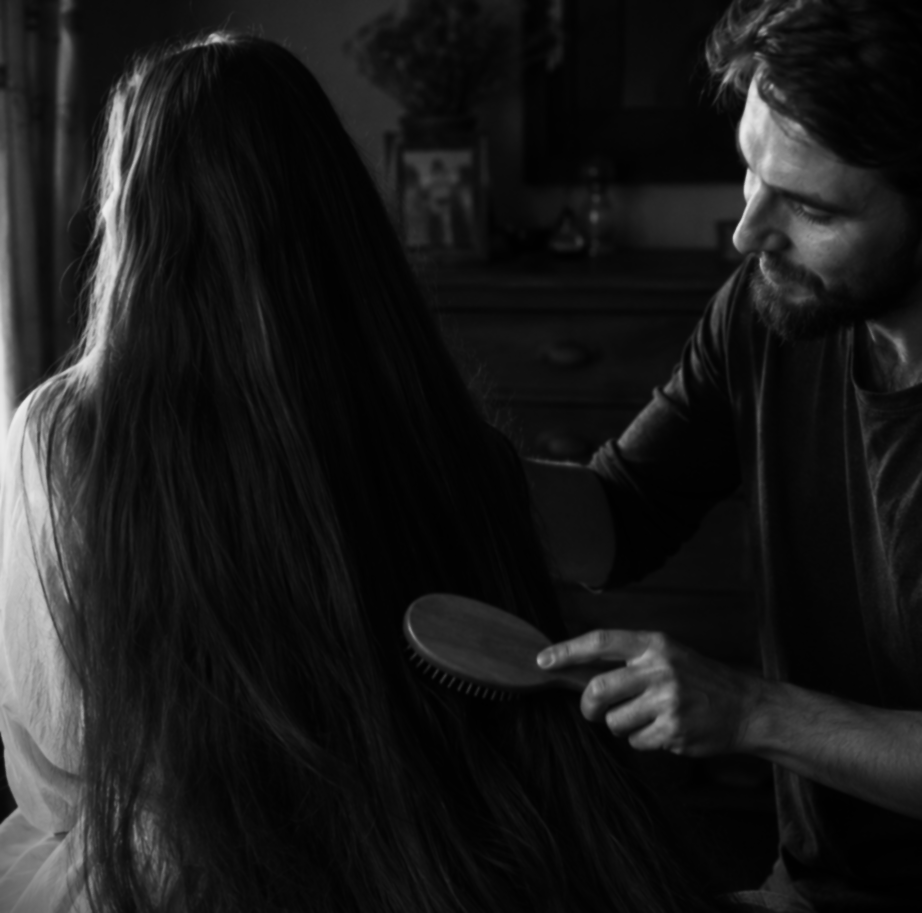
Common areas of fascination include long flowing manes, short cropped styles, particular colours such as red or platinum blonde, curls, braids, ponytails, beards, chest hair, and underarm hair. For some, the appeal lies in watching strands being brushed, washed, or styled. Others are drawn to specific acts: pulling, stroking, smelling, or burying the face in someone’s locks during intimacy.
A subset of trichophiles develop an interest in cut hair as a keepsake or sensory object. This branch sometimes overlaps with collecting behaviour, where the strand itself becomes a treasured item separate from any one person.
Trichophilia symptoms: what the experience looks like
Calling them symptoms makes the interest sound like an illness, which it is not. A better word might be signs, since these are simply the patterns people notice when they recognise the attraction in themselves. They include:

A consistent visual pull toward hair as the first thing noticed about a person
Arousal triggered by the scent of shampoo, conditioner, or freshly washed strands
A strong tactile response to brushing, stroking, or being touched by another person’s mane
Recurring fantasies that centre on hair as the main element rather than a background detail
A tendency to remember partners or strangers by their hairstyle long after other features have faded from memory
An emotional reaction to haircuts, whether excitement, sadness, or a sense of loss
Noticing several of these does not mean something is wrong. It usually means a person has identified a real and durable part of their erotic makeup.
Trichophilia test: how to know if it applies to you
There is no formal questionnaire that diagnoses trichophilia, and no clinical test that confirms it. The closest thing to a useful self-check is a set of honest questions:
- Does hair appear repeatedly in your fantasies as the central feature rather than a passing detail?
- Would intimacy feel meaningfully poorer without some element of hair play involved?
- Have you felt the same pull toward tresses across different partners, ages, or stages of your life?
- Do you notice arousal in non-sexual situations simply from seeing or smelling someone’s strands?
If most answers point in the same direction, the label probably fits. If only one or two do, you may simply enjoy hair the way most people enjoy attractive features, without trichophilia being the right word for it.
Why hair carries such erotic weight
Hair has been loaded with meaning for thousands of years. In many traditions it represents vitality, fertility, and freedom. Religious texts dictate when it should be covered, cut, or grown. Folklore links strands to magic and seduction, from Rapunzel’s tower to the myth of Samson. When something carries that much symbolic charge across cultures, it is hardly surprising that it also carries erotic potential.
There are sensory reasons too. Few parts of the body combine visual beauty with rich tactile feedback and a distinctive scent the way a head of hair does. Running fingers through someone’s locks engages sight, touch, and smell at once. For people wired toward this kind of sensory layering, the experience offers an unusually complete reward.
Personal history matters as well. Many trichophiles trace their attraction to early memories tied to hair: a parent’s perfume mingling with shampoo, a first crush with a particular ponytail, a moment of closeness defined by the feel of strands against skin. Erotic templates often form quietly in childhood and adolescence.
Is trichophilia normal?
Yes. A fascination with hair sits well within the range of ordinary human sexuality. It only becomes a clinical concern under the same conditions that apply to any other interest: when it causes the person distress, when it interferes with daily functioning, or when it involves non-consenting parties.
Most people with this attraction lead unremarkable romantic and sexual lives. They find partners who enjoy the attention or who actively share the fascination, and the interest becomes a positive part of their intimacy rather than a problem to solve.
Trichophilia treatment: when and why someone might seek support
For the vast majority of trichophiles, treatment is not the right frame at all. The attraction is not a disorder, and there is nothing to cure. The healthier question is how to integrate it into a fulfilling life.
Support becomes useful in specific situations: when shame around the attraction causes ongoing distress, when intrusive thoughts feel unmanageable, or when behaviour crosses into non-consenting territory such as taking hair from someone without permission. In those cases, a sex-positive therapist trained in kink-aware practice can help. The goal is rarely to remove the interest. It is to help the person live with it in a way that respects both their own wellbeing and the people around them.
Bringing a hair fetish into a relationship
Communication is the bridge between a private interest and a shared experience. Telling a partner about this attraction can feel exposing, particularly if previous reactions have been dismissive, but the conversation tends to go better when framed as an invitation rather than a confession.
Practical ways to share the experience include slow brushing sessions, washing each other’s strands, incorporating pulling into intimacy with clear agreements about intensity, or simply spending time with locks as part of foreplay. People who enjoy giving sensation often find that their partner’s pleasure becomes its own reward.
If one partner has the fetish and the other does not, the aim is not to manufacture matching desire. It is to find a version of the activity that genuinely pleases both people.
Consent and hair play
Like every form of intimate exploration, hair play depends on consent. Pulling can be intensely pleasurable, but it can also cause real pain if done carelessly. The basics matter: grip from the base of the scalp rather than the ends, agree on signals beforehand, and check in afterwards.
Cutting a partner’s hair, even a small lock, is a meaningful act that should never happen without explicit agreement. Strands grow back slowly, and people often have strong feelings about them that are not always obvious in the moment. The same applies to any activity involving hair from someone outside the relationship; consent is not transferable, and curiosity is never a substitute for permission.
Exploring further with Fety
Trichophilia is one of many doorways into a richer understanding of desire. Whether the attraction is new to you or something you have lived with for years, the conversation around it deserves to be open, informed, and free of shame. Fety exists to make that conversation possible.
Trichophilia is the clinical term for a hair fetish, meaning a sexual or sensual attraction to hair. The word comes from the Greek roots thrix (hair) and philia (love or affection). It describes a fascination that goes beyond ordinary aesthetic appreciation and into the territory of arousal, whether the focus is on length, texture, scent, colour, or the act of grooming.
Trichophilia is pronounced trick-oh-FIL-ee-uh. The stress falls on the third syllable, and the opening tri rhymes with trick rather than try. The same emphasis pattern appears in related words like podophilia and retifism.
Yes. A fascination with hair sits well within the range of ordinary human sexuality. It only becomes a clinical concern when it causes the person distress, interferes with daily functioning, or involves anyone who has not consented. Most trichophiles lead unremarkable romantic and sexual lives and find partners who enjoy sharing the interest.
Common signs include a consistent visual pull toward hair as the first thing noticed about a person, arousal triggered by the scent of shampoo or freshly washed strands, a strong tactile response to brushing or stroking, recurring fantasies centred on hair rather than treating it as a background detail, and an emotional reaction to haircuts. Noticing several of these usually means a person has identified a real part of their erotic makeup.
Trichophilia is not a disorder and most people never need treatment. Support becomes useful only in specific situations: when shame around the interest causes ongoing distress, when intrusive thoughts feel unmanageable, or when behaviour crosses into non-consenting territory. A sex-positive therapist trained in kink-aware practice can help in those cases, with the goal of integration rather than removal.